Social Media
Social Media Marketing Strategies for Businesses in 2026
Social Media Strategies That Help Businesses Grow in 2026
Social media has changed significantly over the past few years. It is no longer just a place for businesses to publish promotional posts and collect followers. Today, customers use social platforms to discover brands, research products, watch reviews, interact with businesses, and make purchasing decisions.
In 2026, successful social media marketing is becoming more focused on relevance, originality, community, and measurable business outcomes.
For businesses, the challenge is not simply to post more content. It is to create the right content, reach the right audience, and give people a reason to engage with the brand.
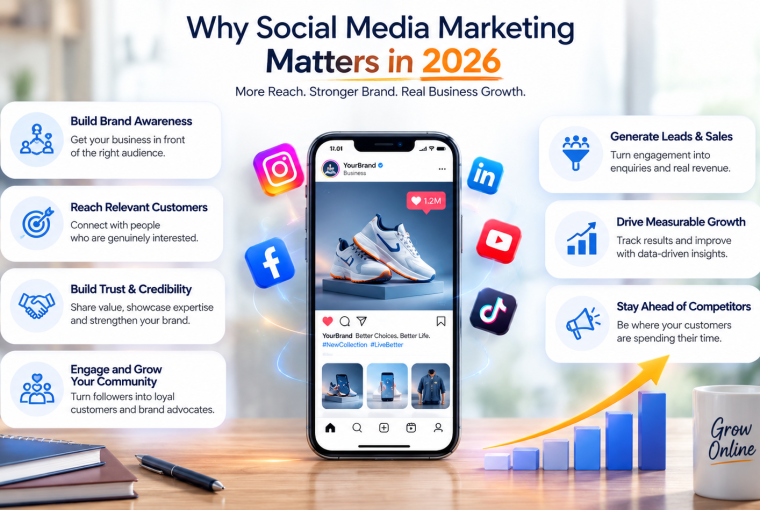
Why Social Media Marketing Matters in 2026
Social media continues to play an important role in brand discovery and customer engagement. In India, Meta’s 2026 research highlights the growing importance of short-form video, with Reels becoming a major channel for discovery, creator engagement, and commerce across urban and rural audiences.
This means businesses need to think beyond traditional promotional posts.
A strong social media marketing strategy should help a brand:
- Build awareness
- Reach relevant audiences
- Establish credibility
- Generate enquiries and leads
- Build relationships with customers
- Support sales
- Strengthen brand recognition
- Understand what content actually performs
- Create More Short-Form Video Content
Short-form video remains one of the most important parts of social media marketing in 2026.
Instagram Reels, Facebook Reels, YouTube Shorts, and TikTok give businesses opportunities to communicate ideas quickly and reach people beyond their existing followers.
For Indian audiences in particular, Meta’s 2026 research shows strong daily video engagement across both urban and rural users, with Reels playing a major role in product discovery and purchase influence.
Businesses can use short-form videos for:
- Product demonstrations
- Customer questions
- Industry tips
- Behind-the-scenes content
- Product comparisons
- Educational content
- Customer testimonials
- Company stories
- Quick problem-solving videos
The key is not to create videos simply because video is popular. Each video should have a clear purpose and provide something useful, interesting, or relevant to the audience.
- Focus on Original and Authentic Content
In 2026, copying popular content or making minor changes to existing posts is becoming a weaker strategy.
Meta has specifically stated that Facebook is prioritizing original content and reducing the distribution of duplicative or low-value content.
This is an important lesson for businesses.
Instead of copying what competitors are doing, create content based on your own expertise, customer questions, experiences, products, and industry knowledge.
For example, a manufacturing company could share how its products are made, common customer mistakes, installation advice, product comparisons, or insights from its own team.
Original content gives audiences a reason to follow the brand rather than simply seeing another version of something they have already seen.
- Build Content Around Your Audience
One of the biggest mistake’s businesses make on social media is creating content based entirely on what they want to say.
Effective social media marketing strategies start with understanding what the audience wants to know.
Before planning content, consider:
- What questions do customers frequently ask?
- What problems are they trying to solve?
- What information influences their buying decision?
- What concerns stop them from making a purchase?
- What type of content do they already engage with?
- What makes them trust a brand?
When content addresses real customer needs, it becomes much easier to create meaningful engagement.
- Use Different Content Formats
Posting the same type of creative every day can quickly make a social media page feel repetitive.
A stronger approach is to build a mix of content formats.
For example:
Educational:
Tips, guides, explanations, industry insights, and how-to content.
Engagement:
Questions, polls, opinions, quizzes, and conversations.
Brand:
Company updates, achievements, values, culture, and milestones.
Product or Service:
Features, benefits, demonstrations, use cases, and comparisons.
Social Proof:
Testimonials, reviews, case studies, and customer experiences.
Video:
Reels, Shorts, tutorials, interviews, and behind-the-scenes content.
This content mix keeps the page useful while still supporting commercial objectives.
- Make Social Media More Search-Friendly
Social platforms are increasingly being used as discovery tools.
People often search directly on Instagram, TikTok, YouTube, LinkedIn, and other platforms to find products, services, businesses, recommendations, and information.
This makes social media SEO increasingly important.
Businesses should pay attention to:
- Profile names
- Bio descriptions
- Relevant keywords
- Captions
- Video titles
- Hashtags
- Location information
- Alt text where available
- Topic relevance
Instead of filling captions with unrelated hashtags, focus on language that naturally describes what the content is about and what the audience is searching for.
- Use Creators and User-Generated Content
People often trust experiences from other customers more than traditional advertisements.
This is why user-generated content (UGC) and creator collaborations continue to play an important role in social media marketing.
TikTok’s 2026 business research highlights the growing importance of authentic content and creator-led conversations, while its tools increasingly help brands discover and amplify relevant UGC.
Businesses can use:
- Customer reviews
- Product videos
- Creator collaborations
- Unboxing content
- Customer stories
- Testimonials
- Demonstration videos
- Community posts
The goal is not to make every piece of content look like an advertisement. Real experiences often create stronger credibility.
- Build a Community, Not Just a Follower Count
A large follower count does not automatically mean a strong social media presence.
A smaller audience that actively comments, shares content, asks questions, and recommends the brand can be much more valuable.
Businesses should make time for:
- Replying to comments
- Answering questions
- Responding to messages
- Acknowledging customer feedback
- Starting relevant conversations
- Sharing useful community content
Social media works best when it becomes a two-way communication channel rather than a digital notice board.
- Use AI to Improve Efficiency—Not Replace Creativity
AI is becoming a normal part of modern social media marketing.
It can help marketers with content ideas, research, editing, translation, performance analysis, creative variations, and campaign optimization.
Meta and TikTok are both expanding AI-powered tools for content creation, campaign management, and performance improvement in 2026.
However, businesses should avoid publishing large volumes of generic AI-generated content without human review.
AI can help with speed and efficiency. The brand’s knowledge, personality, creativity, and understanding of customers still need to come from people.
The best approach is to use AI as a supporting tool while keeping the final content relevant and authentic.
- Create Platform-Specific Content
A common mistake is creating one post and publishing exactly the same version everywhere.
Different platforms have different audiences and content behaviours.
Focus on Reels, visual storytelling, carousels, creator content, Stories, and engaging captions.
Use a mix of video, community-oriented content, informative posts, Reels, and customer-focused communication.
Focus on professional insights, industry knowledge, thought leadership, business stories, case studies, and useful visual content. LinkedIn recommends using a variety of rich-media formats to improve engagement and communicate effectively with professional audiences.
TikTok
Prioritize platform-native, authentic, entertaining, and culturally relevant content. TikTok’s 2026 trend research emphasizes real experiences, community participation, curiosity, and content that provides a reason to keep exploring.
The strategy should remain consistent across platforms, but the execution should be adapted to each audience.
- Combine Organic Content With Paid Advertising
Organic social media can build trust and long-term visibility, but paid advertising can help businesses reach specific audiences more quickly.
A balanced social media marketing strategy can combine:
- Organic content
- Paid social campaigns
- Retargeting
- Lead generation campaigns
- Video advertising
- Website traffic campaigns
- Conversion-focused campaigns
The important point is to connect paid and organic activity rather than treating them as completely separate strategies.
- Measure Business Results, Not Just Likes
Likes and followers can tell you something about engagement, but they should not be the only measures of success.
Businesses should track metrics that relate to their objectives.
Depending on the campaign, this may include:
- Reach
- Engagement rate
- Video watch time
- Profile visits
- Website traffic
- Leads
- Enquiries
- Conversion rate
- Cost per lead
- Customer acquisition cost
- Return on advertising spend
Modern platforms are also providing more sophisticated tools for connecting content performance with audience behaviour and conversions. TikTok’s Market Scope, for example, combines paid, organic, and branded data to help marketers understand audiences across the funnel.
- Experiment and Improve Consistently
There is no single social media formula that works for every business.
A format that performs well for one brand may produce very different results for another.
That is why testing is important.
Businesses can experiment with:
- Different video hooks
- Content topics
- Captions
- Creative formats
- Posting times
- Calls to action
- Audience segments
- Advertising creatives
The important part is to learn from the data instead of simply posting more content.
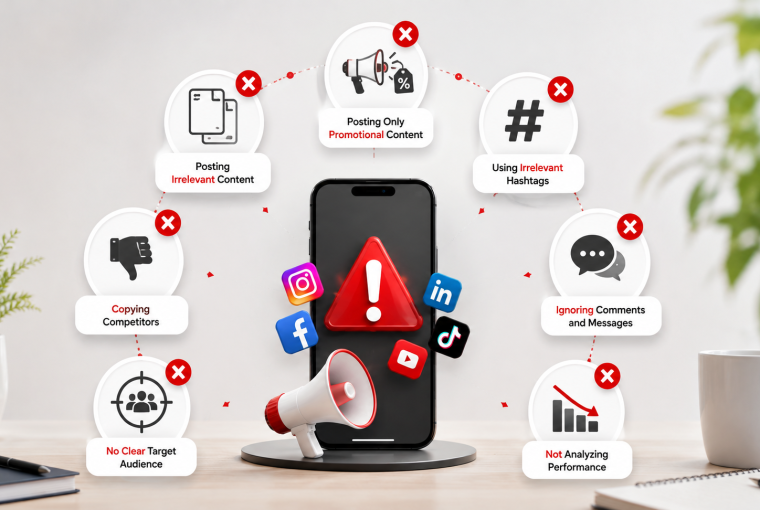
Common Social Media Marketing Mistakes to Avoid
Even a well-planned strategy can lose effectiveness if the basics are ignored.
Avoid:
- Posting only promotional content
- Copying competitors
- Using irrelevant hashtags
- Ignoring comments and messages
- Publishing without a clear objective
- Focusing only on follower growth
- Using the same creative across every platform
- Relying completely on AI-generated content
- Ignoring performance data
- Expecting immediate results
A strong social media presence is built through consistency, relevance, experimentation, and genuine audience understanding.
How to Build an Effective Social Media Marketing Strategy in 2026
A practical strategy does not need to be complicated.
Start by defining what you want social media to achieve.
For example:
Brand Awareness → Engagement → Trust → Leads → Conversions
Then identify the platforms where your target audience is most active.
From there, create content pillars, develop a realistic publishing schedule, experiment with different formats, promote high-performing content, and review results regularly.
This approach makes social media marketing more purposeful and connects daily content with larger business objectives.
Why Choose Kreative Hunks for Social Media Marketing?
Managing social media effectively requires more than creating attractive posts.
Kreative Hunks approaches social media marketing by combining strategy, creative content, audience understanding, paid advertising, and performance analysis.
The focus is on building a social media presence that supports real business goals—not simply increasing the number of posts published each month.
From content planning and creative development to social media management, paid campaigns, and performance reporting, Kreative Hunks helps businesses create a more consistent and results-focused digital presence.
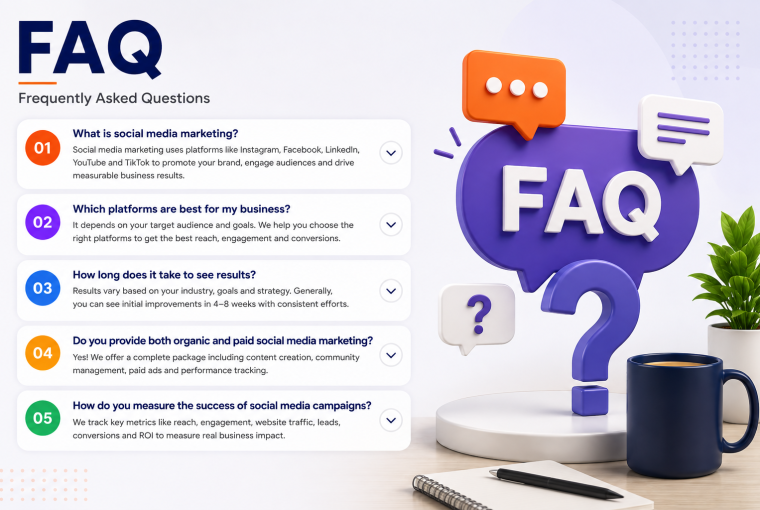
Frequently Asked Questions
- What is the most effective social media marketing strategy in 2026?
There is no single strategy that works for every business. However, short-form video, original content, creator and UGC collaborations, community building, platform-specific content, and performance measurement are important elements of a modern social media marketing strategy.
- Is short-form video still important in 2026?
Yes. Short-form video remains a major discovery and engagement format, particularly in India. Meta’s 2026 research highlights the strong role of Reels in brand discovery, creator engagement, and purchase influence.
- Should businesses use AI for social media content?
AI can help businesses generate ideas, improve efficiency, analyze performance, and create variations. However, human expertise and brand understanding should remain central to the final content.
- How often should a business post on social media?
There is no universal number. The right frequency depends on the platform, audience, available resources, and content quality.
Consistent, useful content is generally more valuable than publishing large amounts of low-quality content.
- Should businesses focus on followers or engagement?
Both can be useful, but engagement and business outcomes are often more meaningful than follower numbers alone. Leads, website visits, enquiries, conversions, and customer acquisition should also be considered.
- Which social media platform is best for businesses?
It depends on the target audience and business model. Instagram and Facebook can be effective for visual and consumer-focused brands, LinkedIn is particularly useful for B2B and professional audiences, while TikTok can be valuable for brands that can create platform-native short-form content.
- What is social media SEO?
Social media SEO involves optimizing profiles and content so that people can discover a business through searches within social platforms and other search environments.
- How can Kreative Hunks help with social media marketing?
Kreative Hunks can support businesses with social media strategy, content planning, creative development, social media management, paid advertising, audience targeting, and performance analysis.
The approach is built around the business’s audience, objectives, industry, and growth requirements.