SEO
On-Page SEO vs Off-Page SEO: What’s the Difference?
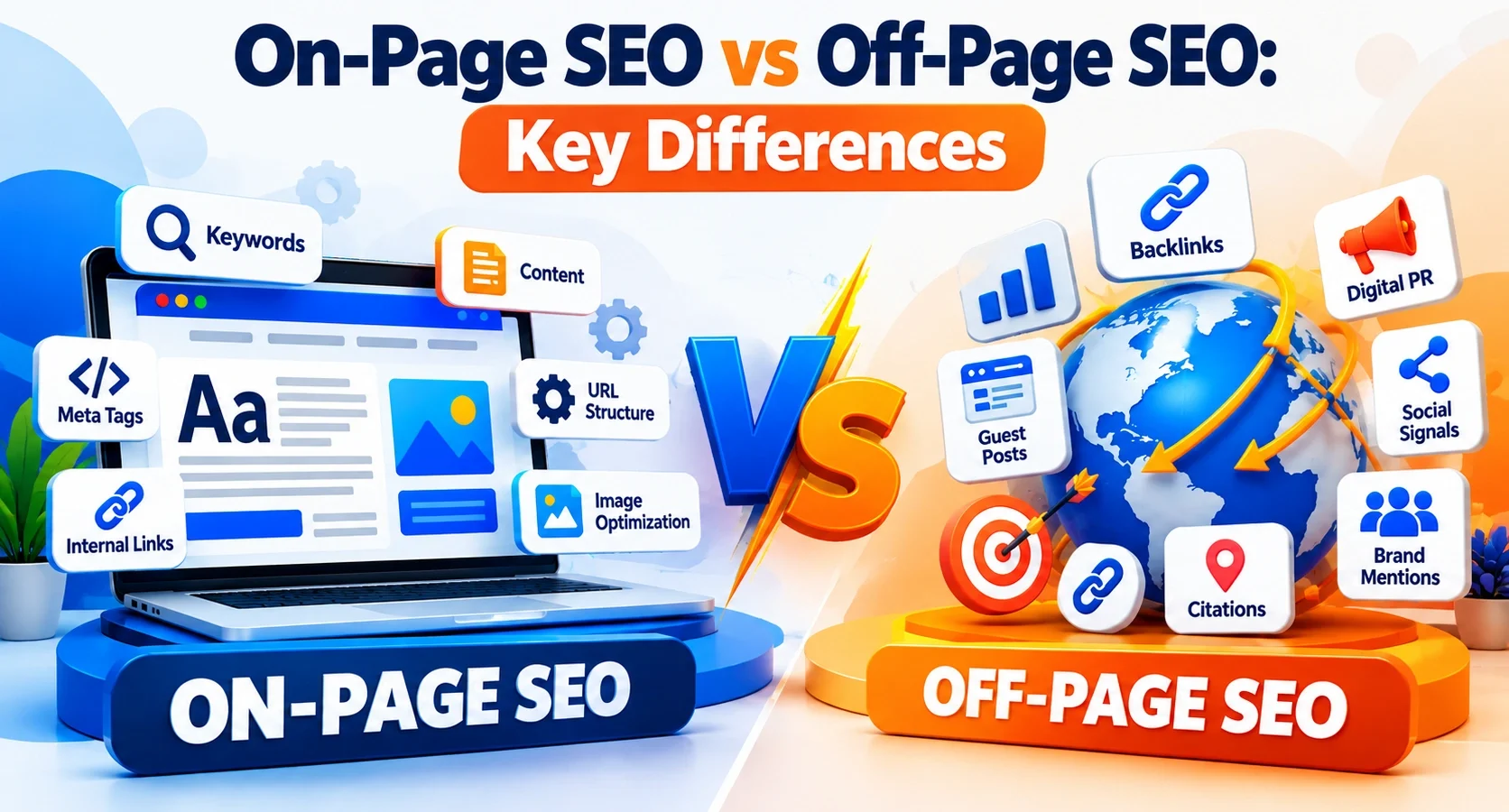
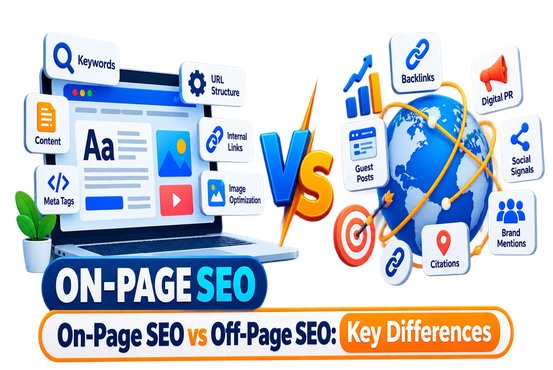
On-Page SEO vs Off-Page SEO
Search engine optimization is one of the most important parts of building long-term online visibility. But SEO is not limited to adding keywords to a website or publishing blog articles.
A successful SEO strategy involves several different activities, including on-page SEO, off-page SEO, technical SEO, content optimization, keyword research, internal linking, and authority building.
Among these, on-page SEO and off-page SEO are two fundamental areas that every business should understand.
On-page SEO focuses on optimizing elements within your website, while off-page SEO focuses on building your website’s authority and credibility outside your website.
Understanding the difference between on-page SEO vs off-page SEO can help businesses create a more complete search engine optimization strategy and improve their chances of attracting relevant organic traffic.
What Is On-Page SEO?
On-page SEO refers to optimizing the content and elements of individual webpages to make them more useful for visitors and easier for search engines to understand.
It includes everything you can directly control on your website.
A typical on-page SEO strategy can include:
- Keyword optimization
- SEO titles
- Meta descriptions
- Heading structure
- URL optimization
- Content optimization
- Internal linking
- Image optimization
- Alt text
- Search intent optimization
- Content readability
- User experience
For example, if a digital marketing agency wants to rank for “digital marketing agency in Hyderabad,” the relevant service page should clearly explain the services offered, address the user’s search intent, use relevant keywords naturally, and provide a useful experience.
On-page SEO helps search engines understand what your page is about and whether it is relevant to a particular search query.
What Is Off-Page SEO?
Off-page SEO refers to activities performed outside your website that can help strengthen its authority, reputation, and visibility.
The most commonly discussed part of off-page SEO is link building.
When relevant and trustworthy websites link to your content, these links can help search engines understand that your website is referenced by other sources.
However, off-page SEO is not limited to backlinks.
It can include:
- Link building
- Digital PR
- Brand mentions
- Content outreach
- Guest contributions
- Business citations
- Industry relationships
- Local SEO activities
- Online reputation building
The objective is to build credibility around your website and brand beyond your own webpages.
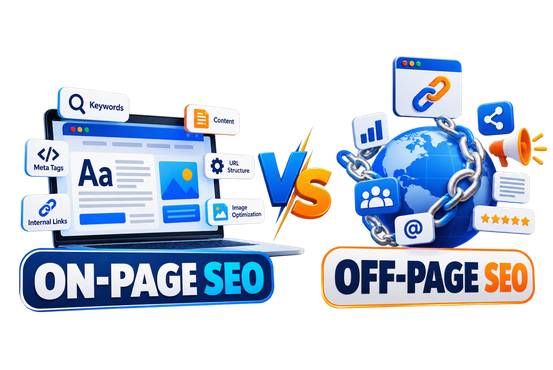
On-Page SEO vs Off-Page SEO: Key Differences
Both are part of SEO, they focus on different areas.
On-page SEO is primarily about relevance and website optimization.
Off-page SEO is primarily about authority and external signals.
- Where the Optimization Happens
On-page SEO happens directly on your website.
This includes optimizing your content, headings, URLs, images, internal links, titles, and other webpage elements.
Off-page SEO happens outside your website.
This can include earning backlinks, building brand mentions, digital PR, outreach, and other external activities.
- Main Objective
The primary objective of on-page SEO is to help search engines understand your content and determine its relevance to users’ searches.
The primary objective of off-page SEO is to strengthen the authority, credibility, and reputation of your website.
- Keywords
Keywords are an important part of on-page SEO.
Businesses can optimize relevant pages around keywords and topics their target audience searches for.
Off-page SEO does not normally involve placing keywords directly on your website. Instead, external links, mentions, and references can contribute to your website’s overall authority and relevance.
- Backlinks
Backlinks are generally associated with off-page SEO.
For example, if an industry publication references your website and links to one of your useful resources, that external link can become part of your off-page SEO profile.
On-page SEO focuses more on how your own pages are connected through internal linking.
- Level of Control
Businesses have significant direct control over on-page SEO.
You can change your:
- Content
- Page titles
- Headings
- URLs
- Internal links
- Images
- Meta descriptions
Off-page SEO is different.
You cannot completely control whether another website links to you or mentions your brand. Instead, you need to create valuable content and build relationships that can increase opportunities for relevant external references.
Why Is On-Page SEO Important?
A website can have excellent products or services, but search engines still need to understand the website before determining where its pages may appear in search results.
Effective on-page SEO helps businesses:
- Improve content relevance
- Target valuable search queries
- Create better website structure
- Improve internal linking
- Make content easier to understand
- Improve user experience
- Support organic search visibility
For example, a company offering SEO services in Hyderabad may create a dedicated SEO service page.
That page can be optimized around relevant search intent, explain the company’s SEO services, include supporting information, link to related resources, and provide clear calls to action.
This creates a stronger foundation for organic search visibility.
Why Is Off-Page SEO Important?
Search engines do not evaluate websites based only on the content they publish themselves.
External references can also provide useful signals about a website’s authority and reputation.
A strong off-page SEO strategy can help businesses:
- Build website authority
- Earn relevant backlinks
- Increase referral traffic
- Improve brand visibility
- Strengthen online reputation
- Support competitive keyword rankings
- Build relationships within their industry
However, off-page SEO should focus on quality and relevance rather than simply collecting a large number of backlinks.
A relevant backlink from a credible website can be more valuable than numerous unrelated or low-quality links.
Why Choose Kreative Hunks for SEO?
SEO requires more than adding keywords to webpages.
At Kreative Hunks, our approach combines SEO strategy, content, technical optimization, website development, analytics, and digital marketing to build a stronger online presence.
Our SEO-focused services can include:
- SEO Strategy
- Keyword Research
- On-Page SEO
- Technical SEO
- Content Strategy
- Local SEO
- Off-Page SEO
- Link Building
- Website Optimization
- Analytics & Performance Tracking
The focus is on understanding the business, identifying relevant search opportunities, improving website visibility, and connecting SEO activity with measurable business objectives.
Whether you are building a new website, improving an existing website, or trying to increase organic leads, a structured SEO strategy can help create a stronger foundation for long-term digital growth.
Frequently Asked Questions
- What is the difference between on-page SEO and off-page SEO?
On-page SEO focuses on optimizing elements within your website, including content, keywords, titles, headings, URLs, images, and internal links. Off-page SEO focuses on activities outside your website, such as backlinks, digital PR, brand mentions, and authority building.
- Is on-page SEO more important than off-page SEO?
Both address different aspects of SEO. On-page SEO helps establish relevance and improve the website itself, while off-page SEO helps build authority and credibility. A comprehensive SEO strategy generally considers both.
- Are backlinks part of off-page SEO?
Yes. Backlinks are one of the most commonly discussed components of off-page SEO. However, backlink quality, relevance, and context are more important than simply acquiring a large number of links.
- Can SEO work without backlinks?
Websites can rank for some search queries without having a large backlink profile, particularly for less competitive topics. However, external authority can become increasingly important for competitive search terms.
- What are the main on-page SEO techniques?
Important on-page SEO techniques include keyword research, content optimization, SEO titles, meta descriptions, heading structure, internal linking, URL optimization, image optimization, and search intent optimization.
- What are the main off-page SEO techniques?
Off-page SEO can include link building, digital PR, content outreach, brand mentions, relevant citations, industry partnerships, and other activities that help build external authority and visibility.
- What is technical SEO?
Technical SEO focuses on the technical foundation of a website, including crawling, indexing, website structure, page performance, mobile usability, XML sitemaps, canonical URLs, structured data, and other technical elements.
- How long does SEO take to show results?
SEO results vary depending on competition, website authority, content quality, technical SEO, keyword difficulty, industry, and the existing condition of the website. Consistent optimization is generally required to build and maintain organic visibility.
- Should small businesses invest in on-page and off-page SEO?
Small businesses can use both approaches depending on their goals and competition. On-page SEO provides a strong foundation for the website, while off-page activities can help build authority and improve visibility in competitive markets.
- Can Kreative Hunks help with on-page and off-page SEO?
Yes. Kreative Hunks provides SEO and digital marketing services covering areas such as keyword research, on-page SEO, technical SEO, content strategy, off-page SEO, link building, website optimization, and performance tracking.