Performance Marketing
How Digital Marketing Helps Businesses Generate Qualified Leads
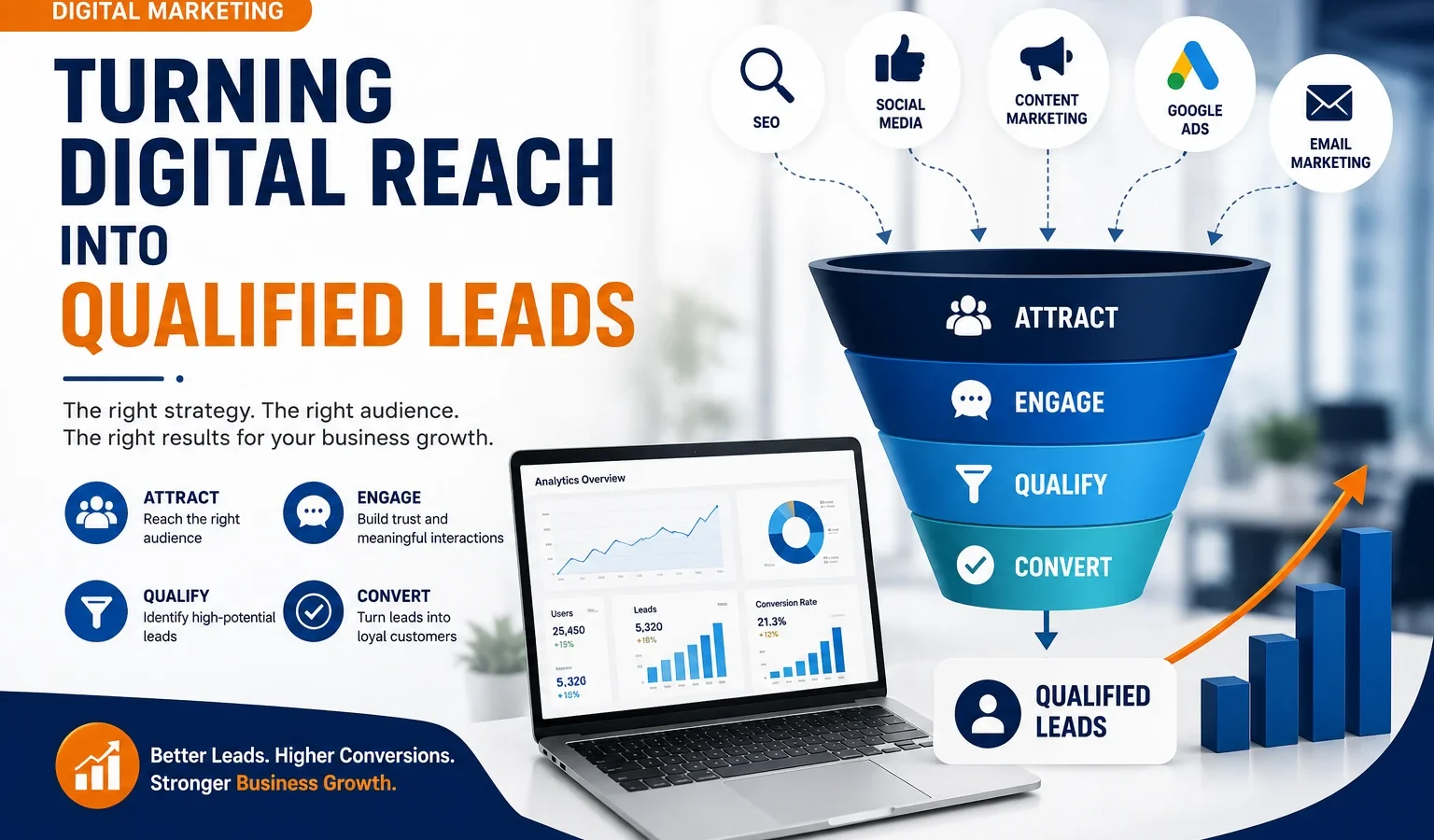
Turning Digital Reach Into Qualified Leads
In today’s competitive business environment, attracting potential customers is only the first step. The real challenge is attracting people who are genuinely interested in your products or services and are more likely to become paying customers. This is where digital marketing plays an important role.
A well-planned digital marketing strategy helps businesses reach the right audience, build trust, capture customer information, and nurture prospects throughout the buying journey. Instead of generating a large number of unqualified inquiries, businesses can use SEO, social media marketing, Google Ads, content marketing, and performance marketing to generate qualified leads.
What Are Qualified Leads?
A qualified lead is a potential customer who has shown genuine interest in a business and meets certain criteria that make them more likely to purchase.
For example, someone searching for “best digital marketing agency for small businesses” and submitting an enquiry form is generally more valuable than someone who simply views a social media post.
Qualified leads can be identified based on factors such as:
- Their interest in a specific product or service
- Their business requirements
- Their budget
- Their location
- Their purchasing intent
- Their interaction with your website or marketing content
The goal of lead generation is therefore not simply to increase the number of enquiries but to improve the quality and conversion potential of those enquiries.
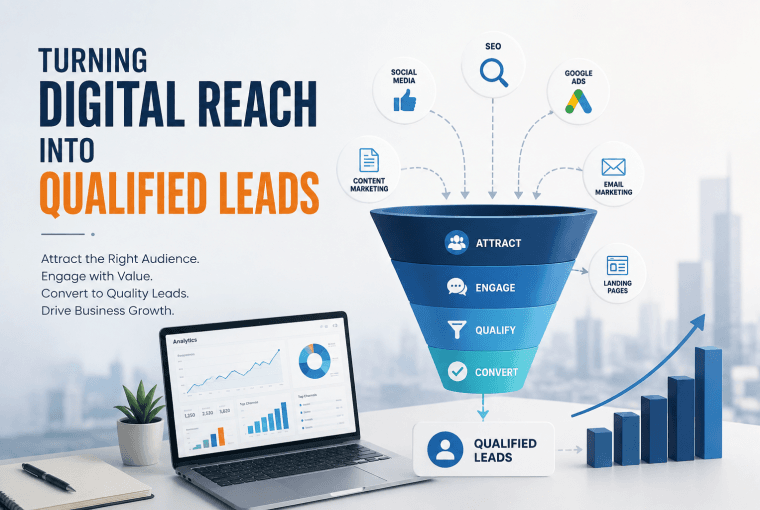
How Digital Marketing Generates Qualified Leads
- Search Engine Optimization Attracts High-Intent Customers
Search Engine Optimization (SEO) helps businesses appear when potential customers actively search for products, services, or solutions.
For example, a person searching for:
- “digital marketing company in Hyderabad”
- “Google Ads agency for small business”
- “best SEO services for businesses”
- “website development company”
already has a specific requirement.
By targeting relevant SEO keywords, businesses can attract users with stronger purchase intent. Optimized landing pages, informative blog content, technical SEO, local SEO, and relevant keyword targeting can help convert organic search traffic into qualified leads.
- Google Ads Targets Customers With Purchase Intent
Google Ads allows businesses to reach potential customers at the moment they are searching for a relevant product or service.
Unlike traditional advertising, search advertising can target users based on specific keywords and search intent.
For example, a business offering web development services can target searches such as:
“website development company near me”
or
“professional website development services.”
With the right campaign structure, keyword selection, ad copy, landing page, and conversion tracking, Google Ads lead generation can deliver highly relevant enquiries.
- Social Media Marketing Builds Demand and Generates Leads
Social media marketing helps businesses connect with their target audience across platforms such as Instagram, Facebook, and LinkedIn.
Businesses can use social media to:
- Build brand awareness
- Educate potential customers
- Showcase products and services
- Share customer success stories
- Promote offers
- Generate enquiries
- Drive traffic to landing pages
Social media advertising also provides detailed audience targeting options, helping businesses reach people based on demographics, interests, behaviours, and other relevant signals.
- Content Marketing Builds Trust Before the Sale
Customers often research a business before making a purchasing decision.
This makes content marketing an important part of the lead-generation process.
Businesses can create:
- Blog articles
- Case studies
- Guides
- Videos
- Infographics
- Customer success stories
- Industry insights
- FAQs
Useful content answers customer questions and establishes the business as a credible source of information.
When potential customers repeatedly find valuable content from your brand, they are more likely to trust your business and eventually make an enquiry.
- Landing Pages Turn Traffic Into Leads
Driving visitors to a website is not enough. Businesses also need conversion-focused landing pages that encourage visitors to take action.
An effective landing page should include:
- A clear headline
- Strong value proposition
- Relevant information
- Benefits of the product or service
- Customer proof or testimonials
- Clear call-to-action
- Simple enquiry form
- Contact information
For example, instead of sending Google Ads traffic to a generic homepage, a business can direct visitors to a dedicated lead generation landing page designed specifically for the advertised service.
This can significantly improve the chances of converting visitors into leads.
- Remarketing Converts Interested Visitors
Not every visitor will become a customer during their first interaction with a business.
Some visitors may:
- Browse your website
- Read your blog
- View a product
- Check pricing
- Visit a service page
- Leave without submitting an enquiry
Remarketing allows businesses to reconnect with these potential customers through targeted advertising.
By showing relevant ads to people who have already interacted with your brand, businesses can stay visible during the customer’s decision-making process.
- Marketing Automation Helps Nurture Leads
Generating a lead is not the end of the marketing process.
Some prospects may need additional information before they are ready to purchase. Marketing automation can help businesses nurture these leads through emails, follow-ups, WhatsApp communication, CRM workflows, and personalized content.
For example:
Website Visitor → Enquiry → Follow-Up → Product Information → Case Study → Sales Conversation → Conversion
A structured lead nurturing strategy helps businesses avoid losing potential customers simply because they were not ready to purchase immediately.
- Data Analytics Improves Lead Quality
One of the biggest advantages of digital marketing is the ability to measure performance.
Businesses can track metrics such as:
- Website traffic
- Lead volume
- Cost per lead
- Conversion rate
- Click-through rate
- Landing page performance
- Customer acquisition cost
- Return on advertising spend
- Lead-to-customer conversion rate
This data helps businesses understand which marketing channels are generating valuable prospects.
For example, if a campaign generates 500 leads but only five become customers, increasing the number of leads may not solve the problem. Instead, the business needs to improve lead quality and conversion efficiency.
- Performance Marketing Focuses on Measurable Results
Performance marketing focuses on measurable actions such as leads, enquiries, registrations, purchases, and conversions.
Rather than simply measuring impressions or reach, businesses can evaluate how their marketing investment contributes to actual business outcomes.
A performance-driven approach helps businesses:
- Identify high-performing campaigns
- Reduce wasted advertising spend
- Improve targeting
- Optimize landing pages
- Test different messaging
- Increase conversion rates
- Improve cost per qualified lead
- Local SEO Helps Businesses Attract Nearby Customers
For businesses serving specific cities or locations, local SEO can be an effective source of qualified leads.
Optimizing your Google Business Profile, website, location pages, reviews, and local search presence can help your business appear when nearby customers search for relevant services.
For example:
“Digital marketing agency near me”
has stronger local intent than a general search such as:
“What is digital marketing?”
Targeting this type of search intent helps businesses attract people who are closer to making a purchasing decision.
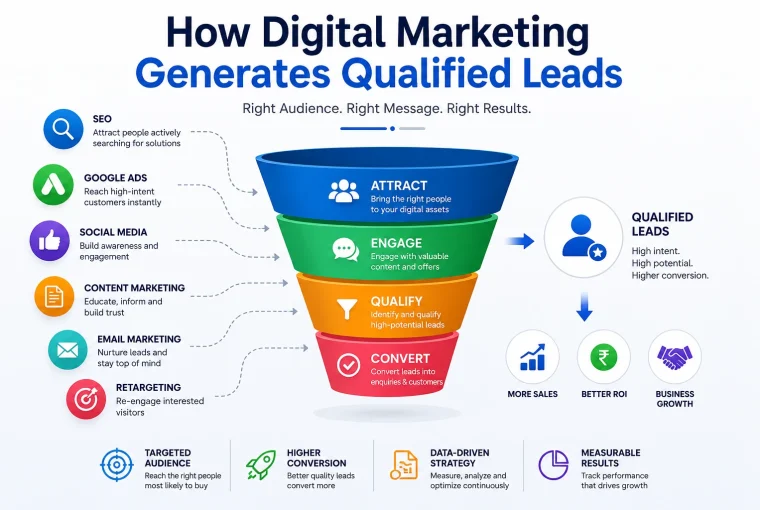
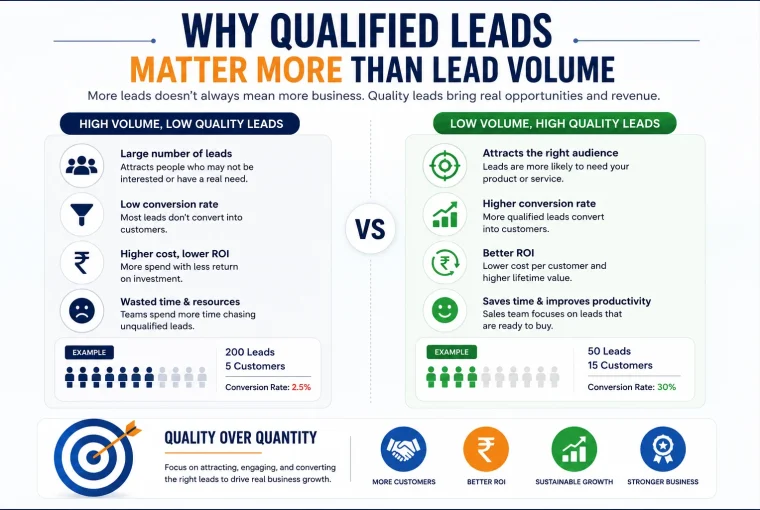
Why Qualified Leads Matter More Than Lead Volume
Generating thousands of leads may look impressive, but lead quantity alone does not guarantee business growth.
A successful lead generation strategy focuses on attracting prospects who are more likely to:
- Need your product or service
- Match your target customer profile
- Have purchasing intent
- Engage with your sales team
- Become paying customers
This is why businesses should measure qualified leads, not just total leads.
For example:
Campaign A: 1,000 leads → 10 customers
Campaign B: 200 leads → 25 customers
Campaign B generates fewer leads but produces better business results.
The objective of digital marketing should therefore be better leads, better conversions, and better ROI.
How Kreative Hunks Helps Businesses Generate Qualified Leads
At Kreative Hunks, we focus on building digital marketing strategies around business objectives rather than vanity metrics.
Our approach can combine:
- SEO & Organic Growth
- Google Ads & PPC
- Meta Ads
- Social Media Marketing
- Content Marketing
- Landing Page Development
- Conversion Optimization
- Analytics & Performance Tracking
- Lead Generation Strategies
By combining different digital channels, businesses can attract potential customers at different stages of the buying journey.
The objective is simple: reach the right audience, generate relevant enquiries, and convert opportunities into business growth.
Frequently Asked Questions
- How does digital marketing generate qualified leads?
Digital marketing generates qualified leads by targeting people based on their search intent, interests, demographics, behaviour, location, and engagement. SEO, Google Ads, social media, content marketing, landing pages, and remarketing can all contribute to qualified lead generation.
- What is the difference between a lead and a qualified lead?
A lead is someone who has shown some level of interest in a business. A qualified lead meets specific criteria and has a stronger possibility of becoming a customer based on their needs, intent, budget, or other relevant factors.
- Which digital marketing channel is best for lead generation?
There is no single best channel for every business. SEO, Google Ads, social media advertising, content marketing, and email marketing can all generate leads. The right channel depends on the target audience, industry, sales cycle, location, and business objectives.
- How can SEO improve lead generation?
SEO helps businesses attract people who are actively searching for relevant products or services. By targeting high-intent keywords and creating optimized service pages and useful content, businesses can attract organic traffic with stronger potential to convert.
- Are Google Ads good for generating qualified leads?
Yes. Google Ads can be highly effective for qualified lead generation because businesses can target users who are actively searching for specific products and services. Campaign performance depends heavily on keyword targeting, ad quality, landing pages, audience targeting, and conversion tracking.
- How can social media generate qualified leads?
Businesses can use social media marketing to build awareness, educate audiences, showcase expertise, and drive users toward enquiry forms, websites, landing pages, or direct messages. Paid social campaigns can also target specific audience segments.
- How do I measure the quality of my leads?
Businesses can evaluate lead quality using metrics such as lead-to-customer conversion rate, cost per qualified lead, customer acquisition cost, sales-qualified leads, conversion rate, and return on advertising spend (ROAS).
- How long does digital marketing take to generate leads?
The timeframe depends on the marketing channel and industry. Paid advertising can potentially generate leads quickly, while SEO and organic marketing generally require more time to build visibility and authority. A combination of short-term and long-term strategies can provide more sustainable results.
- Can digital marketing reduce customer acquisition costs?
Yes. By continuously optimizing targeting, campaigns, landing pages, content, and conversion processes, businesses can improve marketing efficiency and potentially reduce customer acquisition costs over time.
- Why is conversion tracking important for lead generation?
Conversion tracking helps businesses identify which campaigns, keywords, audiences, and channels are producing actual enquiries and customers. This allows marketing budgets to be allocated toward strategies that generate measurable business results.